Engage regulators early
Pre-submission meetings (FDA Q-Sub) and scientific advice (EMA/national bodies) before the design is frozen, so the trial that proves Amnia is the trial regulators actually asked for.
Anyone can render a beautiful pod. Bringing a genuinely new life-support category safely to a child means clearing the most demanding regulatory, clinical, and ethical bar in medicine. We don't treat that as an obstacle to route around. It is the product. This page lays out, honestly and in detail, the path we intend to walk and where the real uncertainty lives.
An honest disclaimer. Amnia is at an early, pre-clinical stage. Nothing here is a claim of approval, clearance, or an active trial. It is our current best understanding of the pathways ahead, written so families, clinicians, partners, and regulators can hold us to it. This is not medical or regulatory advice.
The failure mode for ambitious medical technology is building the device, then discovering the evidence regulators need was never collected. We run the regulatory strategy in parallel with the engineering from day one.
Pre-submission meetings (FDA Q-Sub) and scientific advice (EMA/national bodies) before the design is frozen, so the trial that proves Amnia is the trial regulators actually asked for.
Every safety claim maps to a pre-specified endpoint, a validated measurement, and an independent reviewer. If we can't measure it, we don't claim it.
Independent ethics and human-subjects oversight isn't a sign-off at the end; it sits alongside the science with the power to halt, from the first animal study onward.
A complete artificial womb is not a single, tidy product. It combines a high-risk implantable/perfusion medical device (the synthetic placenta and amniotic loop), software as a medical device (the monitoring and AI guardian), and potentially biologic elements. In regulatory terms that points toward a combination product in the highest risk class: the longest, most evidence-heavy pathway that exists.
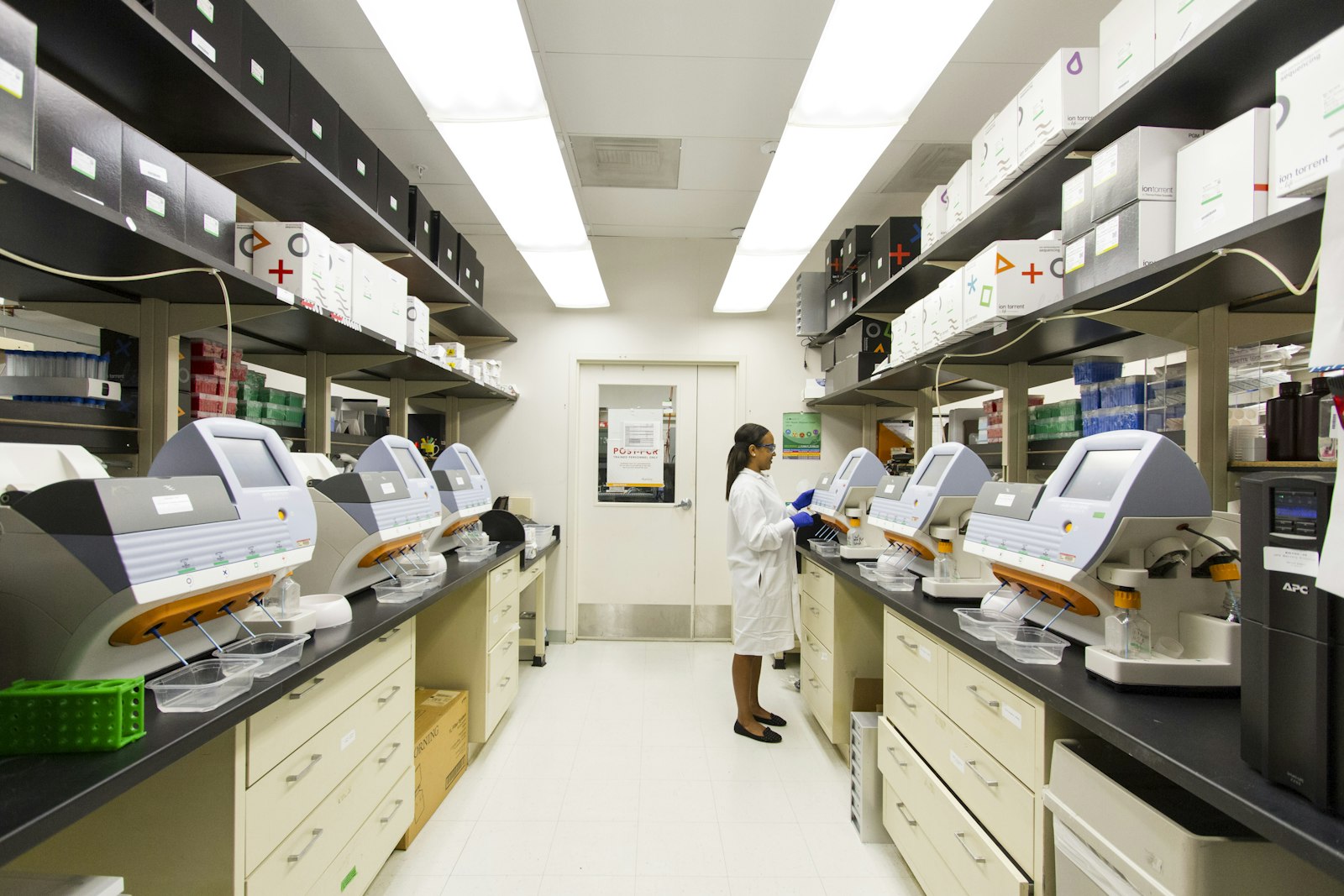
With no predicate device, Amnia's realistic route is a full Premarket Approval (PMA) supported by a clinical investigation run under an Investigational Device Exemption (IDE), the most rigorous path the FDA operates.
Voluntary meetings with FDA (likely CDRH, coordinated with CBER for any biologic aspects) to agree on classification, the study design, and the endpoints that will define success, long before a trial begins.
Amnia targets a life-threatening condition with no adequate alternative: the profile the Breakthrough Devices Program exists for. It brings priority review and sustained FDA interaction, without lowering the evidence bar.
Biocompatibility, sterility, hemocompatibility, electrical safety, software validation, and large-animal survival studies under Good Laboratory Practice: the dossier that justifies a first human study.
An approved Investigational Device Exemption permits a tightly controlled clinical investigation. It requires FDA and IRB sign-off, informed consent, and a Data & Safety Monitoring Board with the authority to stop.
First a narrow feasibility study in the most fragile pre-term infants where standard care is failing (a "bridge to viability"), then a larger pivotal study powered to prove safety and effectiveness.
The full Premarket Approval submission, likely an advisory-panel hearing, and, if approved, mandatory post-market surveillance, a registry, and manufacturing under Quality System Regulation (21 CFR 820).
In the EU, market access runs through CE marking under the Medical Device Regulation (EU) 2017/745 (MDR) rather than a single central approval, with the European Medicines Agency and expert panels involved where a medicinal or biologic component exists.
A high-risk (Class III) device is assessed by an independent, EU-designated Notified Body that audits the quality system and technical documentation before any CE mark.
Human studies require an authorised clinical investigation under MDR Article 62, approved by the national competent authority and an ethics committee in each member state.
For novel Class III devices, MDR adds a clinical-evaluation consultation with independent EU expert panels, an extra layer specifically for first-of-kind technology.
If any part is a medicinal product, EMA/national medicines rules and the Clinical Trials Regulation (EU) 536/2014 apply alongside the device route.
Registration in the EUDAMED database, Unique Device Identification, and post-market clinical follow-up are mandatory throughout the product's life.
Continuous post-market surveillance, periodic safety update reports, and incident vigilance reporting to competent authorities.
Regulatory clearance is necessary but not sufficient. Every study involving a developing human, and their parents as decision-makers, passes through independent ethics review that can, and should, say no. Amnia treats these bodies as partners with real authority, not formalities.

"The first question is never 'can we?' It is 'should we, for this child, right now?'"
Amnia ethics working group
Approval is not portable. Each jurisdiction has its own submission, its own evidence expectations, and its own ethics framework. Our strategy sequences them deliberately rather than assuming one approval unlocks the rest.
| Jurisdiction | Regulator | Core pathway for a novel high-risk device | Human-subjects & ethics |
|---|---|---|---|
| United States | FDA (CDRH, with CBER) | IDE → Premarket Approval (PMA); Breakthrough Device eligible | IRB per site; DSMB; 21 CFR 50/56 |
| European Union | Notified Bodies + EMA / national authorities | Clinical investigation (Art. 62) → CE mark under MDR 2017/745 | National ethics committee + competent authority |
| United Kingdom | MHRA | Post-Brexit UKCA route; Innovative Devices Access Pathway (IDAP) | HRA / NHS Research Ethics Committee |
| Japan | PMDA / MHLW | Shonin approval; SAKIGAKE fast-track for breakthrough tech | Certified Review Board; ethics guidelines |
| Canada | Health Canada | Class IV Medical Device Licence; Investigational Testing Authorization | Research Ethics Board; TCPS 2 |
| Australia | TGA | ARTG inclusion (Class III / AIMD); CTN/CTX trial schemes | Human Research Ethics Committee |
Frameworks evolve, and an artificial womb sits at the frontier of several of them at once: device law, assisted-reproduction rules, and neonatal-care standards. We monitor each jurisdiction and engage its regulator directly rather than assume equivalence.
This mirrors our product roadmap, but tracks the regulatory milestone that gates each step. No phase begins until the evidence from the last one has cleared independent review.
Regulatory classification analysis, quality-management system stand-up, and first informal pre-submission conversations.
GLP large-animal and bench evidence; formal FDA Q-Sub and EU scientific advice; Breakthrough Device application.
Investigational Device Exemption and EU clinical-investigation approval, each paired with IRB / ethics-committee sign-off.
Supervised first-in-human bridge-to-viability studies, then a pivotal investigation, under continuous DSMB monitoring.
PMA / CE-mark submission and review, followed by mandatory post-market surveillance and jurisdiction-by-jurisdiction rollout.
Vaporware hides its uncertainty. We'd rather name it. These are open problems the whole field, not just Amnia, still has to work through, and our timelines depend on them.
Supporting a struggling pre-term infant is a recognised clinical goal. Full gestation from early development raises distinct legal and ethical questions that regulators have not yet fully defined.
What counts as a "successful" outcome, and how long you must follow a child to know, has no established standard for this technology. We expect to help define it, with regulators, not around them.
Assisted-reproduction and embryo law, personhood, and viability thresholds differ sharply by country and are actively changing. Our rollout order will follow where the framework is clearest.
If you are a regulator, clinician, bioethicist, or researcher who works on any of the above, we would genuinely rather hear your hard questions now than later. Follow the journey, or come help us walk it.
Honest science, in the open. That's the whole point.